BREAKING NEWS! Victory at the Employment Appeal Tribunal! — March 4, 2015

BREAKING NEWS! Victory at the Employment Appeal Tribunal!

The IWGB has just had a victory at the Employment Appeal Tribunal!

Roughly one year ago the IWGB submitted a request in line with ICE Regulations to force Cofely to inform and consult its employees. This is because due to a loophole in the law we can’t force trade union recognition despite the fact that we represent 70% of the workforce.

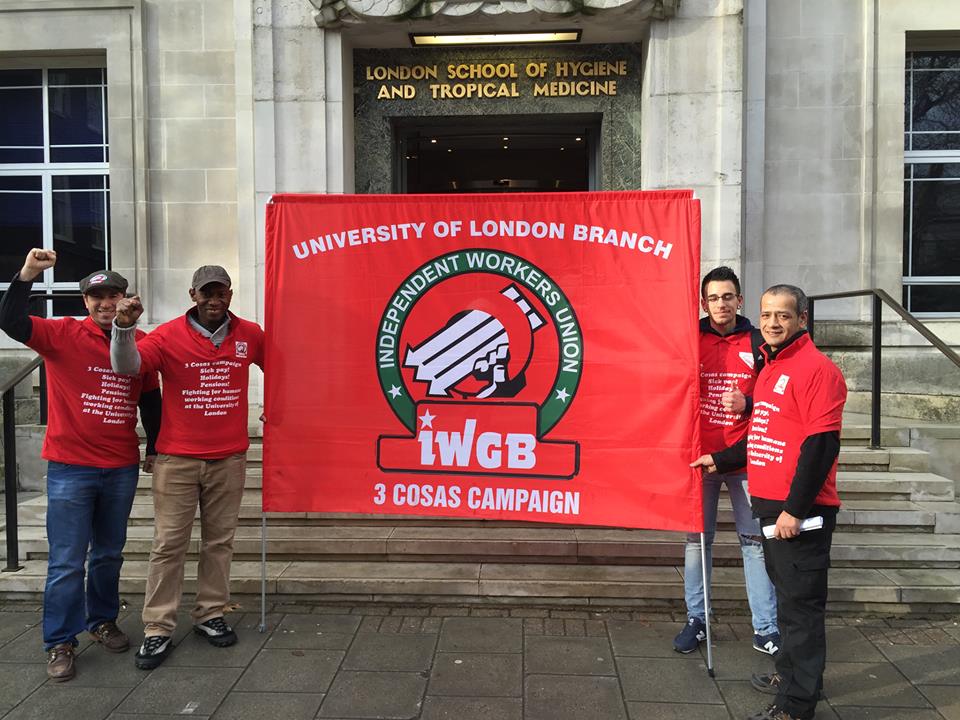
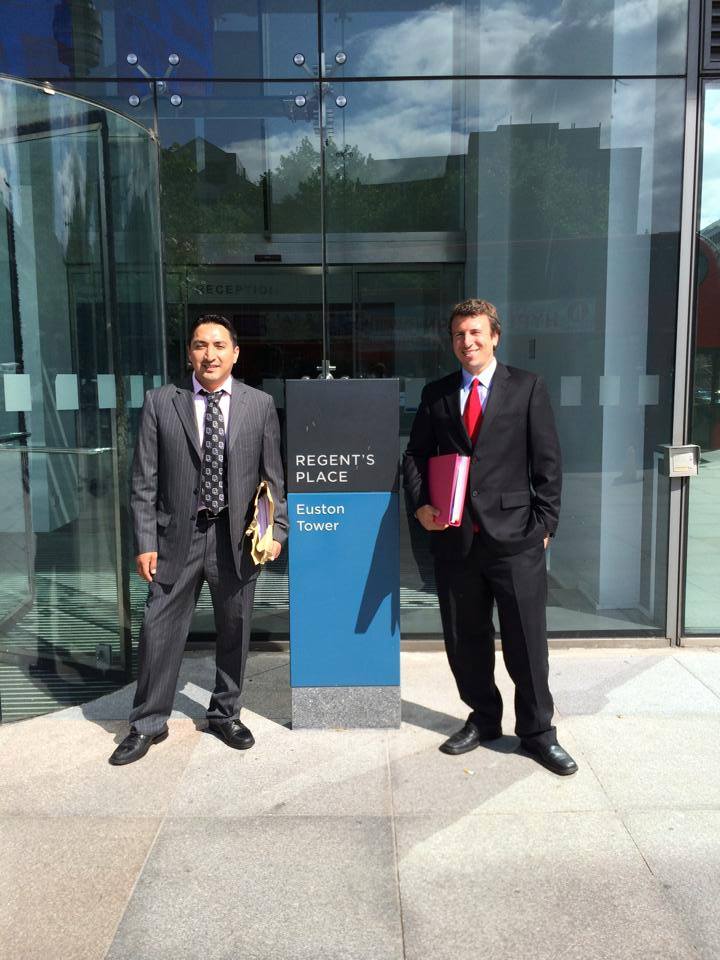
Cofely fought us on the request with their high paid lawyers and we had to argue our case at the Central Arbitration Committee (picture below last summer). We lost that case and appealed to the Employment Appeal Tribunal. The EAT judge threw the case out in the first instance. Today we had the hearing to appeal against the judge’s decision to throw the case out and we won! That means that it will now go to a full hearing at the EAT. If we win that case then it will have ramifications for the entire UK!

11046438_814363085319262_3340556825508154573_n

Why IWGB is challenging UoL’s ICE ballot —

Why IWGB is challenging UoL’s ICE ballot

By Catherine Morrissey, UoL employee and Secretary of University of London IWGB

The University of London IWGB has put in a complaint about UoL’s recent handling of the ballot on the Information and Consultation of Employees (ICE), which we believe was illegal. Our aim is to have the ballot declared void, and for UoL to have to run the process again in a fairer way – enabling IWGB members to participate and have a voice.

As an independent, democratic union, our sole purpose is to assert the rights of our members and to act on their behalf to improve working conditions at UoL. We do this every day, not just by putting pressure on management, but also through hours of assistance on a personal level. We’re open and inclusive and will stand up for our members – which is why so many people are joining.

IWGB organised the initial ICE request, which should have created a forum in which all University employees would be directly informed and consulted over major issues that affect us. As a non-recognised but large group on campus, IWGB intends to represent our members on this forum: particularly, to convey their dissatisfaction with the backroom deal that was done over London Weighting. But the way the ICE request has been handled is in effect cutting out IWGB, preventing us from participating in a meaningful way. In the following blog post I’ll explain what was wrong with the process, what the ICE Regulations actually are (!) and why IWGB is taking a stand.

The background
On 29 January this year, University of London staff were suddenly, and in most cases unexpectedly, informed that the University was about to run a ballot to do with information and consultation of employees.

Everyone, it said, would get a chance to vote in the ballot – but there was no opportunity to comment or ask questions via the University’s intranet post, no University manager nominated to answer queries, and no all-staff meeting or other communication dedicated to explaining what was going on and why. A one-page intranet post was all we were given. The ballot commenced just two business days later and was only open for one working week.

Scale this up for a minute and imagine being asked to vote in a nationwide election where you don’t know what it’s for, how it came about and what the candidates will actually be doing once elected, and you begin to see a problem with this approach.

To some of us, however, the announcement wasn’t totally out of the blue – although as I’ll go on to explain, aspects of it were certainly a surprise. I am one of 162 University employees who signed a petition in November 2014, to force the University to set up an Information and Consultation of Employees (ICE) forum. Alongside others, I took the petition round to colleagues and I personally submitted it to the Central Arbitration Committee (CAC – the government body that oversees requests under the ICE Regulations 2004) on 11 November 2014.

It’s worth outlining briefly at this point what the ICE regulations are and why this request came about. As the name implies, the Regulations place a statutory requirement on an employer to inform and consult with its staff over issues which affect them.

The biggest such issue at the time was London Weighting, and that was the catalyst for the request. The University was already consulting and negotiating on this issue with its two recognised unions, UNISON and UCU – but many other people, IWGB members especially, would have welcomed the opportunity to engage in the debate. Indeed, many of us had hoped to have it added to the agenda of the All-Staff Meeting in October 2014, so that we could hear from University management but also put across our own views. But rather than talk to staff at the ASM, University management simply cancelled the meeting and went to ground. Requests for the meeting to be rescheduled as a matter of urgency fell on deaf ears.

So IWGB organised the ICE request, garnering signatures from our own members but also from others who wanted a voice. Under the Regulations, if at least 10% of employees make the request it is legally binding on the employer. Our request was declared valid by the CAC around the end of November.

The process
After a valid request has been made, the next steps in the process are:

1. The employer has one month to prove, if it wishes to attempt to do so, that it already has arrangements in place to inform and consult with its employees. Crucially, these arrangements have to cover everyone and must have been approved by the workforce.
(The University could not claim that its voluntary recognition of UNISON and UCU fell under this heading – neither one of those unions represents staff of all grades, and at no time have all UoL staff been asked whether they are happy with these two unions being the sole bodies privileged with speaking on our behalf.)
2. Assuming there is no prior arrangement as defined above, the employer then has three months in which to organise the appointment or election of Negotiating Representatives. These representatives, who are supposed to represent the interests of all the employees, will then meet with the employer and come to an agreement which defines what the ICE forum will cover (there are minimum statutory requirements) and how the election of Employee Reps will be organised.
3. That done, the employer has six months to organise elections for Employee Representatives – i.e., those people who will actually attend regular meetings with the employer and be the channel through which everyone is informed and consulted. There should be one Rep for every fifty employees.
(However, bear in mind that the Employee reps will be bound by whatever has been agreed in stage 2, and that the way the forum will be constituted (apart from the number of reps it contains) will also be decided in stage 2. So it’s crucial that that stage is administered properly, in line with both the letter and spirit of the Regulations.)

What went wrong?
On 19 December, about one month after the initial request was declared valid, I wrote to the University’s Director of HR, Kim Frost, and suggested that people who had signed the original petition would be happy to meet with him in the New Year in order to discuss stage 2. I eventually received a reply from Migy Gaudio (Head of HR (Corporate Services)) to the effect that UoL didn’t think a meeting with staff was necessary and that they would communicate with all staff in due course.

Little did any of us know, however, that UoL management were in fact secretly discussing the employees’ request with another group – the representatives of UNISON and UCU*. Together, UNISON, UCU and UoL came up with a proposal which, in my view, was specifically designed to shut down the possibility of open engagement in the negotiating forum at stage 2. Under this scheme, two reps each from the UNISON and UCU committees would make up the employee side of the negotiating group, effectively making it nothing more than an extension of the existing consultation arrangements they already take part in.

The ICE Regulations stipulate that all employees should be entitled to shape and take part in this forum. That being the case, IWGB members at the University expected that we would have the opportunity to campaign for IWGB candidates to be included in the mix. That did not happen.

No one else had been given the opportunity to put themselves forward: staff simply got to say yes or no. The way the question was phrased made ‘yes’ seem like the right answer – especially as there was no clarity about what would happen if you voted no, and furthermore it was obvious that the University could see how you voted: thus deterring a number of ‘no’ voters from taking part at all.

This is all clearly contrary to the spirit of openness and inclusion that is inherent in the Regulations, and is therefore grounds for our complaint.

The role of the unions
This is a long blog post, but bear with me!

This brings us back to 29 January 2015. Approximately 45 minutes before the University even announced its proposal to all staff via the intranet, UNISON and UCU members received an email communication from their unions, telling them about the ICE request, announcing that members of their branch committees had been nominated as reps, and urging them to vote ‘yes’ to what the University was proposing.

This was the first alarm bell: how could these organisations have been so well-informed about this that they had time to put together a slate, coordinate the composition of almost-identical campaign emails, produce joint campaign materials and secure permission to campaign inside staff offices during the working day, when the rest of UoL’s employees (including, it must be pointed out, their own ordinary members) were still completely in the dark? Why, when the initial request had been signed by a broad group of cross-university employees, and when the named signatory was the Secretary of a third union, was the negotiating committee designed to be made up of these two unions only? And why would two groups claiming to represent the interests of staff – in other words, to challenge and question the University’s decisions on our behalf – be taking such a similar line to our employer?

UNISON and UCU’s communications on the subject of the ICE ballot were confusing, to say the least. Whether this was a deliberate attempt to muddy the waters and confuse their members and non-members alike, or was just a result of a lack of understanding of how it should work, only they can say.

On the one hand they attempted to persuade their members that the ICE request was a good thing for their unions, that they were delighted to have this opportunity to represent and engage with non-members, and that it was an ‘extension of [their] current framework’. On the other hand, they claimed that it was a threat to the JNCC (the Joint Negotiating and Consultation Committee – the body through which they exclusively negotiate with UoL), that if you voted ‘no’ staff would not be consulted on important issues at all in future, and that campaigners for an open forum, myself in particular, were being dishonest and anti-trade union in advocating this.

Given that the ICE is supposed to be a forum that is representative of all staff, it’s entirely possible that some people on it may not be union members. That’s their right. However, as IWGB members know, IWGB does not in any way dispute union members’ right to have their voices heard in discussions over issues that affect staff: indeed, IWGB has been pushing for voluntary recognition at the University since our branch here was founded. We see proof every day that union membership is essential for workers of all grades, and would argue strongly that the best way for staff to be represented is by joining a union – at UoL, by joining IWGB. To accuse the Secretary of a certified Independent Trade Union of being anti-union is patently absurd, but nonetheless an effective way of making people suspicious of our arguments.

We in IWGB would be delighted if the University would voluntarily recognise us and allow us to participate in the existing negotiating structure, but they have repeatedly rebuffed our attempts to open up a dialogue. There are three unions at the University of London, of which IWGB (which also represents the majority of outsourced workers) is the largest, but we alone are not recognised by UoL – although it’s not unusual for an employer to recognise more than two unions (UCL, for example, recognises UNISON, UCU and UNITE).

Recognition is entirely voluntary and would save the University a lot of administrative hassle. If IWGB was recognised, as we have been asking, we would not have had to organise the ICE request at all. We believe our members have the right for their union to be consulted on University matters, and therefore intend to use the ICE forum to make our members’ voices heard. This objective is inherently pro-union, in aiming to expand the union voice at UoL.

Furthermore, we have never claimed that the ICE forum could replace or supplant the JNCC as a negotiating body. The ICE Regulations in no way affect voluntary agreements the employer may have made with other unions. In fact, unions are not mentioned anywhere in the Regulations.

One possible outcome we hoped for in putting in the ICE request was that the University would take the path of least resistance and open up negotiations on LW to include other staff reps, not just UNISON and UCU. But it was not our aim, nor would it have been possible, for the JNCC to be dismantled and for UNISON and UCU to be cut out of the negotiating procedure. The University did not open up negotiations more widely, so we are left with the ICE forum as the only means of conveying our messages to them.

What I have said, and still believe, is that had all staff been able to communicate properly with management on this issue of London Weighting, had we been consulted, the University would have received a pretty strong message from across the board that the settlement they were negotiating through the JNCC was not acceptable. IWGB for one would have been able to convey, through formal channels, that our members were prepared to strike in order to get a better deal. I firmly believe that this would have made all the difference – and that it still could do so. But only if we are properly represented. That is why IWGB wants the ballot to be run again.

Conclusion
The University and its recognised unions ran a coordinated campaign, designed to shut down genuine communication with staff, to confuse and scare those who were interested in the idea of improving it, and to completely turn off those who had no prior knowledge of the idea – as shown by the fact that the majority of people didn’t even vote. This is wholly contrary to what the ICE Regulations were designed to do, and it’s on these grounds that we have complained to the CAC.

What this whole fiasco shows is that an ICE forum is desperately needed, to open up direct communication between UoL management and staff. Indeed, the recent staff survey showed that poor communication ranks about equally with poor London Weighting in the list of problems UoL employees have with the way the University is currently being run.

It’s unfortunate that, rather than taking this opportunity to genuinely engage with all the people that work here, University management has instead taken the chance to undermine the only forum through which we could genuinely communicate with them. If our complaint is upheld, we hope that UoL will have to re-run stage 2 more in the proper spirit – and I will be campaigning for a slate of IWGB candidates to be elected as reps in the forum.

————————————————————————————————–
*The UCU and UNISON committees are to a large extent controlled by a selection of individuals called ‘Regional Officers’, who have not been elected by UCU and UNISON members.

Press release: LOW PAID WORKERS AT THE ROYAL COLLEGE OF ART BEGIN A CAMPAIGN FOR THE LONDON LIVING WAGE — March 3, 2015

Press release: LOW PAID WORKERS AT THE ROYAL COLLEGE OF ART BEGIN A CAMPAIGN FOR THE LONDON LIVING WAGE

rca1FOR IMMEDIATE RELEASE
3 March, 2015, London. Low-paid workers at the prestigious Royal College of Art have this week begun a campaign to win the London Living Wage of £9.15 per hour. The campaign was launched yesterday with a leafleting session at the main entrance to the college in Kensington where more than 400 fliers were distributed.

Like many higher education institutions the Royal College of Art outsources services such as cleaning, catering, and maintenance. As outsourcing often entails, the employees of these companies are on far inferior wages, terms, and conditions than their colleagues who work directly for the Royal College of Art. For example, the cleaners, employed by Ocean Integrated Services, earn as little as £6.82 per hour cleaning the building from 12 to 5am. “It’s difficult to live on such a low salary. Just the rent consumes 50-60% of our earnings,” said Julian Marin, a cleaner at the Royal College of Art.

After years of earning poverty wages outsourced workers at the college decided that enough was enough and they joined the Independent Workers’ Union of Great Britain (IWGB) in order to campaign for the London Living Wage, a rate of pay considered across the political spectrum to be the minimum necessary to avoid living in poverty. Natalie Bennett, Leader of the Green Party and a longtime supporter of the IWGB said: “The fact that the Royal College of Art isn’t even paying some of its workers a living wage is an absolute disgrace. It’s a simple statement to say that if you are working full time you should earn enough money to live on and whatever you do part-time should be pro-rata for that.”

In response to increasing pressure from the IWGB, the Royal College of Art announced that it would pay the London Living Wage to its cleaners in September of this year. However this offer was rejected by the IWGB on the grounds that forcing the workers to continue living in poverty for another half year simply was not tenable. Furthermore, whilst an improvement in wages for cleaners is certainly welcome, the campaign encompasses all outsourced workers, not just cleaners.
The IWGB campaign is rapidly gathering momentum with growing support on social media and from students at the Royal College of Art. Yesterday both the UNITE and UCU branches at the college put out a statement calling for immediate implementation of the London Living Wage. A protest has been called for Friday, 13 March at 1pm at the college and the union is contemplating industrial action if the campaign is not won in the next couple weeks.

For more information, see: https://rcalondonlivingwagecampaign.wordpress.com/about/

Video: https://www.youtube.com/watch?v=33Q4lUPqfDE

Contact: IWGB President Dr. Jason Moyer-Lee at Jasonmoyer-lee@iwgb.org.uk or at 07771783094.

To follow the latest developments see: Facebook: IWGB University of London; Twitter: #RCALivingWage

See full press release here

Save the Date: Branch Meeting, Friday 27th February — February 20, 2015

Save the Date: Branch Meeting, Friday 27th February

The next IWGB branch meeting will be next week on Friday, 27 February at 1.00. Please come along to discuss branch issues such as the recent ICE request and ballot.

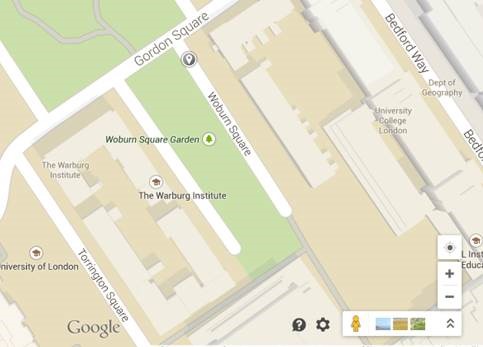
The venue for the meeting will be Room G02, 55 Gordon Square – which is accessed via Woburn Square (it’s on the corner opposite the Warburg Institute – you can’t miss it) so it’s very close by and easy to find. See map below.

If you can’t make that time, other meeting times are 3.00 on the same day in the IWGB office (80 Lamb’s Conduit Street) or 2.00 on Saturday 28 February, also in the IWGB office.

map

IWGB President responds to UCU, Unison and the University — February 12, 2015

IWGB President responds to UCU, Unison and the University

IWGB President Jason Moyer-Lee has sent the following response to UCU, Unison and the University in the aftermath of the not-too-surprising Yes vote to elect four UCU/Unison members to represent all University staff in consultations with senior management.

In the email, Jason tackles the unions’ attack on IWGB Branch Secretary Catherine Morrissey, a tactic showing the sheer lengths these organisations will go to in order to maintain their close relations with powers that be.

Dear UCU and UNISON reps, officials, and bureaucrats
I am writing you, first and foremost, to congratulate you on your recent merger with the University of London HR department. These must be exciting times for your organisations! Indeed, as a fellow trade unionist, I must admit I am a bit envious of the new communications infrastructure that has come out of this merger. You see, when the IWGB wants to communicate with members and supporters we do so using the emails and phone numbers they have provided us with. When UNISON and UCU want to communicate with the entire University of London staff body you just get Kim Frost to send the email for you. I can understand why he does this though. After all, what’s good for UNISON and UCU at Senate House is also good for HR.

By way of this congratulations letter, I would like to comment on an email that you sent on 30 January, 2015, in which you attacked Catherine Morrissey, the IWGB University of London Branch Secretary, for her efforts regarding the Information and Consultation of Employees (ICE) arrangements at UoL. For your records, this email can be seen below. Before I delve into the details, I must say that the tone and content of your letter does take a lot of gall considering that between the lot of you there isn’t a single achievement you can point to in the past three years of “activism” at the University of London.

You say in your email that “UNISON and UCU work hard to ensure that all staff are represented and we welcome more staff joining and getting involved.” Quite clearly you haven’t read the article that came out in the Guardian in March of last year. For your benefit, here’s the link: http://www.theguardian.com/education/2014/mar/24/cost-private-contracts-universities-documents-services-workers. You might also be interested in a follow up article in the Observer: http://www.theguardian.com/commentisfree/2014/jun/21/immigrants-taken-to-cleaners-living-london-wage. As you can see in these articles, far from working hard to represent everyone, UNISON was actually working hard to sell out the outsourced workers at the University of London and invalidate their elections. Indeed- and this part is hard to believe- UNISON even suggested to the University of London that if the University were to offer up one additional day of annual leave that it might undercut the 3 Cosas Campaign, which was fighting for public sector terms and conditions! And don’t forget the classic UNISON blunder of appointing Sharon Bracey, the Cofely Cleaning Services Manager who has been taken to an employment tribunal on allegations of maternity discrimination twice in two years, as rep for Cofely workers.

What is most curious about your email is that you say that your reps are democratically elected and in the same breath that Catherine Morrissey is dishonest and anti-trade union. Given that the email was sent by three unelected UCU officials, one could be forgiven for thinking the accusation of Catherine being dishonest is a bit misplaced. However, what’s even more ironic is that Catherine’s leadership has been put to the test of the ballot box various times, and each time she has won election. Indeed she ran for Branch Secretary and Education Officer at UNISON. My hunch is that she won, but as UNISON invalidated the election we can’t be too sure. But she was then elected unanimously as Education Officer at the IWGB, and the following year she was again elected unanimously Branch Secretary. You say that Catherine is anti-trade union, however the uncomfortable reality is that Catherine does more to promote the interests of workers at the University of London in one week than the lot of you in one year. I also can’t help but point out the blindingly obvious fact that if workers at the University of London felt that UNISON and UCU were doing their jobs then we wouldn’t have obtained signatures from over 10% of the workforce for the ICE agreement in just a matter of days.

In closing, I would point out that I wholeheartedly agree with your statement that unions have fought for generations to improve members’ working lives. Where I think you were perhaps a bit dishonest is to imply that you have had anything to do with that struggle.

As we now proceed to make a legal challenge to your recent coronation by the University of London HR department, no doubt we shall be discussing these ICE regulations once again in the very near future.
Until then, kind regards,

Jason Moyer-Lee

” From: Esmilda Yates
Sent: 30 January 2015 11:11
To: Esmilda Yates
Cc: Barry Jones; Andrew Young
Subject: Important: Please read – All Staff Ballot – VOTE YES
Importance: High

Please pass this onto colleagues in your department

UNISON and UCU together are the recognised trades’ unions at Senate House, University of London. Our recognition agreement provides for a full range of information, consultation and negotiation. UNISON and UCU work hard to ensure that all staff are represented and we welcome more staff joining and getting involved. If you are not currently a member of UCU or UNISON, or you know somebody who isn’t, and you (or they) would like to maximise your ability to influence conditions at University of London, please join the appropriate union.

Our representatives are democratically elected, trained and supported by the wider union – an ICE forum would have no such support and backing. We are national unions that provide specific support to those working in higher education – in UCU and UNISON you having the backing of huge organisations with all the support and solidarity that this provides.

Vote YES for the four representatives who will meet with the University to negotiate the broadening and improvement of the recognition agreement to ensure its in full compliance with the ICE regulations.

Some of you may have received an e-mail from Catherine Morrissey. As the IWGB Branch Secretary, we are surprised that she is, in effect, arguing for non trade union members to have an active role in industrial relations at the University of London! This dishonest anti-trade union position is solely aimed at disrupting and undermining the established consultation arrangements at the University.

There is no need to have two information and consultation forums as Catherine has suggested – this would lead to confusion and conflict and play directly into the employer’s hands.

Unions have fought for generations for the right to be informed and consulted and to improve our members’ working lives. We don’t want the hard work of union activists to be undone by those calling for a non-union forum.

Please VOTE YES.

Sent from the UCU London Regional Office on behalf of the UCU Senate House branch”

IWGB calls on Royal College of Arts to pay outsourced cleaners London Living Wage — February 11, 2015

IWGB calls on Royal College of Arts to pay outsourced cleaners London Living Wage

IWGB President Jason-Moyer Lee sent the following letter to the Roylogoal College of Arts, calling on them to pay their outsourced cleaners the London Living Wage.

Dear Dr. Thompson, Rector of the Royal College of Arts,
I am writing to you, in my capacity as President of the Independent Workers’ Union of Great Britain (IWGB), on behalf of the outsourced workers at the Royal College of Arts who are members of our union.
As you are aware, cleaners on this contract currently earn just above the minimum wage of £6.50 per hour. As a growing consensus of Londoners accepts, the minimum wage simply is not enough to live on. I am therefore writing to request that the Royal College of Arts take immediate action to implement at least a minimum of the London Living Wage (£9.15) for all outsourced workers.
If it is not confirmed by 27 February, 2015 that the London Living Wage will be implemented starting in March’s pay packet, the outsourced workers at the Royal College of Arts are prepared to wage a high profile London Living Wage campaign. These workers will have the full support of the IWGB for this campaign.
Whilst by far the easiest solution would be for the Royal College of Arts to agree an immediate implementation of the London Living Wage, I would like to take this opportunity to be very clear about what will happen if the London Living Wage is not implemented. Among others, the following list of campaign tactics have proved successful in the past and will likely be used to win the London Living Wage at the Royal College of Arts:
1. Leafleting outside the college to raise awareness among the students, employees, and visitors;
2. Loud and disruptive protests;
3. Promoting awareness on social media, in particular Facebook and twitter;
4. Launching a website where campaign followers and participants can follow the latest news on the Royal College of Arts London Living Wage Campaign;
5. Campaign videos with interviews from workers as well as prominent supporters;
6. Write to Royal College of Arts donors and famous alumni to inform them of the fact that outsourced workers at the college are paid poverty wages;
7. Circulate press releases and obtain mainstream press coverage.
You and your colleagues may or may not be familiar with the IWGB and the campaigns this union has waged. However lest you have any doubts about the union’s track record on waging and winning living wage and other campaigns, it might be worth your while to peruse the union website (http://iwgb.org.uk/) and the history and press coverage of the 3 Cosas Campaign at the University of London (http://3cosascampaign.wordpress.com/press-reports/).
In closing, I would advise that the Royal College of Arts not question the determination of the IWGB to achieve justice in this matter. There is nothing that the union treats with more seriousness and urgency than achieving improved wages, terms, and conditions for its members.
The outsourced workers at the Royal College of Arts, and the IWGB more generally, look forward to receiving your response.
Kind regards,

Dr. Jason Moyer-Lee
President
IWGB
http://iwgb.org.uk/

We await the response of the Royal College of Arts and hope they will implement the London Living Wage.

IWGB letter to Vice-Chancellor Adrian Smith over failure to pay London Weighting to maintenance team — February 6, 2015

IWGB letter to Vice-Chancellor Adrian Smith over failure to pay London Weighting to maintenance team

(c) Annabel Church Smith; Supplied by The Public Catalogue FoundationDear Professor Sir Adrian Smith,

I am writing to raise serious concerns relating to Cofely GDF-Suez, the University of London’s current facilities management provider.

It is understood that the University and Cofely are currently in the process of negotiating a potential ten-year extension of their existing contract, and as a consequence it is particularly important that the University be fully apprised of the appropriateness of Cofely as a partner.

Our concerns in this instance relate to Cofely’s treatment of its maintenance and maintenance support staff, who work across the University of London’s estate, largely at Senate House and Stewart House, but also in the Inter-collegiate Halls of Residence.

Since the initial bundling together of the hard and soft services contract in 2010 (awarded at the time to Balfour Beatty Workplace, subsequently bought wholesale by Cofely) the team responsible for maintaining the University’s estate have been rewarded for their loyalty with an ever-increasing workload coupled with ever-shrinking staff numbers.

This approach to profit-maximisation is neither in the interests of Cofely’s employees, nor of the staff and students in the University itself, who rely on their Cofely colleagues to ensure that the buildings they use are maintained to an appropriate standard. Indeed, this is key to the University’s stated Aims, which include ‘property that is valued and relevant’ as part of its core mission.

Cofely have systematically sought to avoid engaging with the concerns of these workers, to such an extent that they feel that they have no alternative than to appeal to the University itself.

The specific case which has brought matters to a head relates to London Weighting. Currently the University is in the process of increasing the level of London Weighting that its staff receive, yet shamefully the people who keep our buildings going have been excluded completely from these considerations.

The majority of Cofely’s maintenance and maintenance support staff (those who did not TUPE from University of London employment in 2010) still receive no London Weighting at all.

In an attempt to resolve this issue amicably and fairly, a number of efforts have been made to raise it with BBW / Cofely:

  1. At a restructuring meeting in 2011, these employees were told they would be moved onto the same terms and conditions as their TUPE’d colleagues (and thus receive London Weighting at £2134) within 18 months at the latest.
  2. Despite this being raised informally during the 18-month period, the company continually deferred or avoided resolving the issue.
  3. When the 18 months elapsed, they sought to raise this issue formally. The Cofely response has been to refuse to negotiate in any way, despite an official grievance and subsequent appeal.
  4. Following this appeal, the group entered pre-dispute early conciliation talks via ACAS.
  5. However, Cofely have failed even to answer ACAS’s call or respond to their letters.

These staff now feel that they have no option but to raise their concerns publicly, and call on the University of London to use its power to insist that any company bidding for this contract undertakes:

  1. To pay London Weighting at the same level as that received by directly employed staff
  2. To consult meaningfully with its staff over London Weighting and other issues of concern to them.

Many of these workers have been through a number of TUPE processes, have worked loyally for the University for many years (frequently going above and beyond the call of duty) and are highly respected by the client. However, inevitably a long period of being ignored and treated like second-class citizens has had its effect on morale, which is currently extremely low.

These are vital staff, forced to appeal to you and to take the steps outlined above by the intransigence of their employer. We hope that the University of London will make clear to Cofely that it faces the choice of making a fair deal with its staff over London Weighting, or being considered an unfit partner for the University in the future.

I await your response.

Yours sincerely,

Catherine Morrissey

Branch Secretary

University of London IWGB

Victory at LSHTM!!!!! —

Victory at LSHTM!!!!!

After receiving notice from the IWGB before Christmas, on 30th January, one day before the IWGB deadline expired, the London School of Hygiene and Tropical Medicine made an offer to its outsourced cleaners of up to 35 days holiday and 6 months sick pay (depending on length of service)!! The terms and conditions would apply retroactively from 1 January, 2015! The workers are currently considering the offer.

This is another fantastic victory for the IWGB, proving that we are a union that gets results for its members!

Victory at LSHTM!
Victory at LSHTM!
All-staff ballot on Monday – please VOTE NO — January 31, 2015

All-staff ballot on Monday – please VOTE NO

You may by now have seen this post on the intranet about ‘Discussions to modify our current information and consultation arrangements; a vote to approve union representation’. You may well be wondering what it’s all about!

This is the beginning of the University’s response to staff’s Information and Consultation of Employees (ICE) request that over 160 staff put forward in November. The intention behind that was to create a forum where all staff, not just those representing two unions, would be represented and consulted over important issues.

It’s great that the University is going to set up a new forum, but the way they are  going about it is not fair and certainly isn’t what many of us hoped for when we signed the petition.

The ICE regulations are supposed to allow all staff to have the opportunity of representing their colleagues in negotiations over the new forum, yet instead of giving everyone the opportunity to stand, the University has attempted to control the process from the start, by limiting the choice of reps to 2 each from the UCU and UNISON committees.

Voting ‘yes’ to the University’s proposal means that only 4 reps, pre-selected from the unions that are already recognised and consulted, would be representing all 1000+ staff.

This is contrary to the letter and spirit of the ICE Regulations, and a complaint has already been lodged with the Central Arbitration Committee (CAC). Our hope is that the University will as a consequence put in place a fairer system.

All respect is due to those people who have already stepped forward and offered to represent us. However, we should all have the chance to stand regardless of our backgrounds, and to freely and fairly elect the reps from those standing on that basis.

If you agree with that, it’s really important to VOTE NO on Monday, and pass this on to your colleagues. This wouldn’t affect the standing of the people who have already put themselves forward – they can stand again if they wish to. It would just enable others to stand too!

Please VOTE NO on Monday for a free choice!